What is demand generation? A complete guide to B2B demand gen

Summarise this article with:



Demand generation is one of the most important parts of sustainable B2B growth.
It helps your business build awareness, earn trust, educate buyers, create interest, and generate demand before prospects are ready to speak to sales. Done well, it makes your brand more visible to the right people and gives your sales team a stronger pipeline to work with.
B2B buyers rarely move in a straight line. They research independently, quietly compare vendors, ask peers for recommendations, and spend time learning about a problem long before they book a demo or reply to outreach messages.
B2B demand generation makes sure you show up during that process.
In this guide, we’ll explain what demand generation is, how it works in B2B, how it differs from lead generation, and how to build a demand gen strategy that creates measurable pipeline.
What is B2B demand generation?
B2B demand generation is the process of creating awareness, interest, and intent among the businesses most likely to buy from you.
It uses coordinated marketing and sales activity to build trust with target accounts, educate buying groups, nurture interest, and support long-term revenue growth.
Unlike lead generation, demand generation is not just about collecting contact details. It is about creating meaningful demand from the right audience, then turning that interest into qualified sales conversations when buyers are ready to engage.
A strong B2B demand generation strategy should help you:
- Reach the right companies before they enter an active buying cycle
- Educate decision-makers and influencers
- Build familiarity across several touchpoints
- Identify accounts showing buying intent
- Nurture prospects until they are sales-ready
- Support lead generation with warmer, better-fit opportunities
- Connect marketing activity to pipeline and revenue
Put simply, demand generation builds the interest. Lead generation helps convert that interest into action.
This is why demand gen matters so much for complex B2B sales. You are not simply trying to win a click. You are trying to influence a decision-making process that may involve several people, several months, and several moments of research before a buyer is ready to talk.
This keeps the bold definition, keeps the useful bullet list, brings lead gen into the explanation early, and removes the need for two separate definition sections.
Demand generation vs lead generation: What’s the difference?
Demand generation and lead generation are closely linked, but they’re not the same thing.
Demand generation focuses on creating awareness, trust, and buying intent. Lead generation focuses on capturing or creating qualified sales opportunities.
| Area | Demand generation | Lead generation |
| Main goal | Build awareness, trust, and demand | Create or capture qualified sales opportunities |
| Audience | Target accounts, buying groups, and future buyers | Prospects who are closer to sales engagement |
| Timing | Earlier in the buyer journey | Later in the buyer journey |
| Common channels | SEO, content, email nurture, LinkedIn, paid media, webinars, retargeting | Outreach, lead capture forms, prospecting, email campaigns, LinkedIn outreach, booked meetings |
| Main metrics | Awareness, engagement, intent signals, pipeline influence | Positive replies, qualified leads, booked meetings, pipeline generated |
| Best use | Creating visibility and warming future buyers | Turning interest into sales conversations |
Think of it this way: demand gen makes more of the right people aware of your business. Lead generation helps you identify who is ready for a conversation.
The best B2B teams use both together. Demand generation builds familiarity and trust, while a strong B2B lead generation service helps convert that interest into qualified opportunities your sales team can act on.
Why does demand generation matter?
Demand generation matters because buyers are in control.
By the time a prospect fills out a form, books a demo, or agrees to a sales call, they have usually done a lot of research already. They may have:
- Read your content
- Compared competitors
- Seen your ads
- Checked reviews
- Spoken to peers
- Visited your website several times
If your brand is not visible during that research phase, you may never make the shortlist.
A strong demand generation strategy helps you:
Build trust before sales contact
Buyers are more likely to engage with brands they recognise, understand, and trust. Demand gen gives you a way to create that trust before a direct sales conversation begins.
Improve lead quality
Not every lead is worth the same amount of sales effort. Demand generation helps attract and nurture better-fit prospects, so your sales team spends more time with businesses that understand the problem and are more likely to convert.
Support longer buying journeys
B2B decisions are rarely instant. Demand generation keeps your brand visible while prospects research, compare, pause, revisit, and build internal consensus.
Align marketing and sales around revenue
Demand generation works best when marketing and sales agree on who to target, what good intent looks like, and when a prospect is ready for follow-up. That alignment helps turn campaign activity into measurable pipeline.
How to build a B2B demand generation strategy
Demand generation works by combining audience insight, relevant messaging, multi-channel activity, intent signals, and sales follow-up.
Here’s what that looks like in practice.
1. Define your ideal customer profile
Before you generate demand, you need to know who you want demand from.
Your ideal customer profile should define the types of businesses most likely to benefit from your product or service. This could include:
- Industry
- Company size
- Location
- Revenue
- Growth stage
- Technology used
- Pain points
- Buying triggers
- Decision-makers involved
The clearer your ICP, the easier it becomes to build demand with businesses that are genuinely likely to convert.
Discover our guide to building your ideal customer profile (ICP) to perfect your targeting.
2. Understand the buying group
In B2B, you are rarely speaking to one person.
A single deal might involve a founder, sales leader, marketing director, finance team, operations lead, procurement contact, and technical stakeholder. Each person may care about something different.
Demand generation should account for those differences. Your campaigns need to educate and influence the wider buying group, not just the person who fills in a form.
3. Create content that answers real buyer questions
Useful content is central to demand generation.
That does not mean publishing generic articles for the sake of it. It means creating content that helps your audience understand a problem, compare solutions, make better decisions, and build confidence in your expertise.
Examples include:
- Educational guides
- Comparison pages
- Industry reports
- Case studies
- Webinars
- Thought leadership
- Checklists
- Explainer videos
- Product-led content
The strongest content answers the questions your buyers are already asking and gives them a reason to keep coming back.
4. Use multiple channels to stay visible
Demand generation is not a one-channel strategy.
Your buyers might discover you through search, see you again on LinkedIn, revisit your website, read a case study, receive an email, attend a webinar, and then respond to outreach weeks later.
Common B2B demand generation channels include:
- SEO and content marketing
- Email nurture
- Paid search
- Paid social
- Retargeting
- Webinars and events
- Direct mail
- Account-based campaigns
- Intent-led outreach
The aim is not to be everywhere at once. It is to choose the channels your buyers actually use and make every touchpoint feel connected.
5. Use intent signals to prioritise follow-up
Not every engaged prospect is ready to buy. But some signals suggest that interest is becoming stronger.
Intent signals might include:
- Visiting high-intent website pages
- Returning to your site several times
- Engaging with product or service content
- Downloading resources
- Attending webinars
- Interacting with emails
- Showing account-level research activity
- Matching buying triggers, such as funding, hiring, expansion, or leadership changes
These signals help sales and marketing teams prioritise the right accounts at the right time. To go deeper, read our guide to B2B intent data and how it helps identify prospects showing real buying interest.
Sopro’s approach combines verified data, intent signals, website visitor identification, and multi-channel engagement to help businesses understand which prospects are showing meaningful interest and when to act.
6. Turn demand into qualified opportunities
Demand generation should not stop at awareness.
At some point, warm interest needs to become a sales conversation. That is where lead generation, prospecting, and sales follow-up become essential.
A strong demand generation strategy gives your sales team context, not just contact details. They should understand who the prospect is, what they have engaged with, what problem they may be researching, and why now might be the right time to reach out.
This is where Sopro’s lead generation service can support demand generation. We help identify the right prospects, build accurate data, run personalised outreach, and deliver qualified opportunities that sales teams can follow up with confidence.
Demand generation channels to consider
The best channel mix depends on your audience, goals, budget, and sales process. These are some of the most useful channels for B2B demand generation.
Content marketing and SEO
Search-led content helps you capture active interest from buyers researching a problem or solution. It can also build trust long before a prospect is ready to speak to sales.
Content should be useful, specific, and connected to real buying questions. If it only attracts traffic without helping prospects move forward, it is unlikely to support pipeline.
Email marketing
Email is still a powerful demand generation channel when it is built on accurate data, relevant messaging, strong deliverability, and clear buyer fit.
For demand generation, email can nurture prospects, share helpful content, re-engage previous leads, and guide buyers towards stronger intent over time.
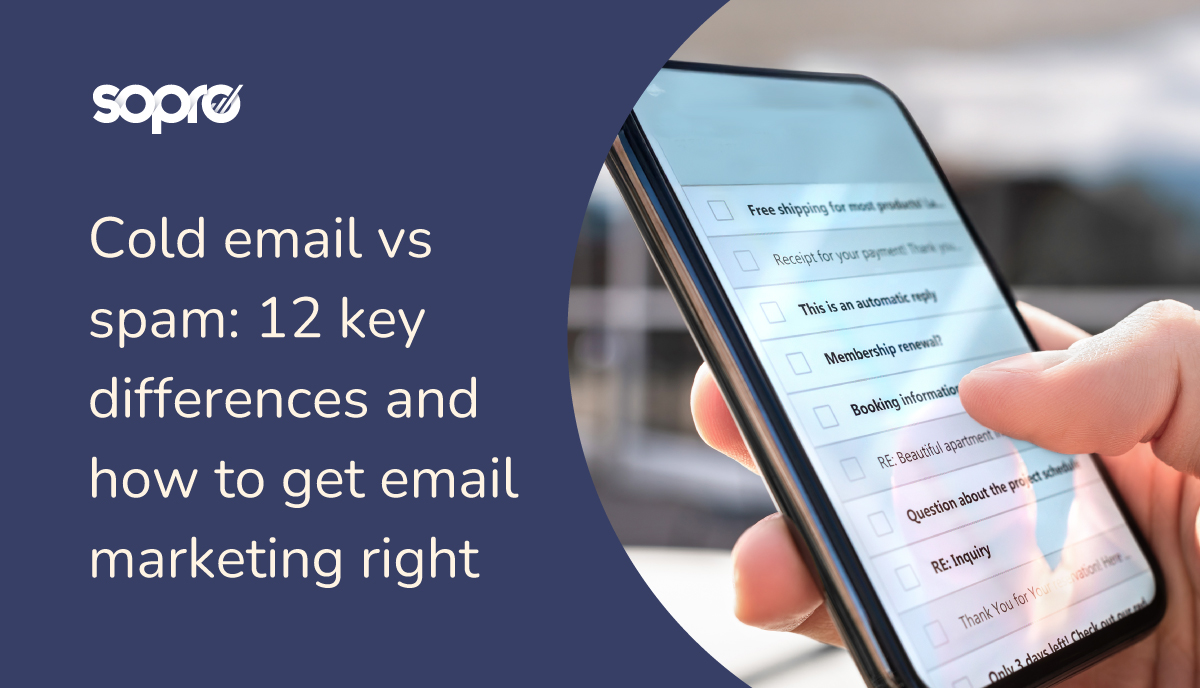
There’s a fine line between spam and cold emails. Stay on the right side of it with our guide: Cold email vs spam: 12 key differences and how to get email marketing right.
LinkedIn is one of the most useful platforms for B2B demand generation because it gives you access to decision-makers, influencers, and buying group members.
It can support organic thought leadership, paid campaigns, direct engagement, employee advocacy, and account-based activity.
Paid media and retargeting
Paid media can help increase visibility with your target audience, promote high-value content, and keep your brand front of mind.
Retargeting is especially useful because it allows you to re-engage people who have already shown interest by visiting your website or interacting with your content.
Webinars and events
Webinars, roundtables, and events help create deeper engagement than a single article or ad. They give prospects a reason to spend more time with your brand and can surface stronger buying intent.
Intent-led outreach
Intent-led outreach connects demand generation with lead generation. Instead of treating every account the same, your team can prioritise prospects showing signs of interest or change.
This makes outreach more timely, relevant, and useful.
Demand generation metrics that matter
Demand generation measurement should show whether your activity is creating meaningful demand, not just attracting attention.
That means looking beyond impressions, clicks, and form fills to understand how buyers are engaging, which accounts are showing intent, and whether that interest is turning into pipeline. For more context on what marketers are measuring, explore our latest demand generation statistics.
Useful metrics include:
- Engagement metrics, such as content engagement, email engagement, webinar attendance, and website visits from relevant companies
- Intent metrics, such as target account engagement, buying signals, and repeat visits to high-intent pages
- Lead and pipeline metrics, such as MQLs, SQLs, positive replies, pipeline generated, and conversion rate
- Revenue metrics, such as customer acquisition cost and revenue influenced or attributed
The most important question is not ‘did this campaign get attention?’ It’s ‘did this activity create meaningful demand, better opportunities, or revenue momentum?’
Common demand generation mistakes
Even experienced teams can struggle with demand generation if the strategy is not focused. These are some of the most common mistakes to avoid.
Chasing leads instead of demand
Form fills are useful, but they do not guarantee intent. If your entire strategy is built around capturing contact details, you may end up with a database full of prospects who are not ready to buy.
Targeting too broadly
Demand generation works best when it is focused. If your audience is too wide, your messaging becomes generic and your budget spreads too thinly.
Measuring the wrong things
Clicks and impressions can show activity, but they do not always show progress. Make sure your reporting connects engagement to pipeline and revenue.
Treating sales follow-up as an afterthought
Demand generation creates interest, but sales still needs the right context to act on it. If handoff is unclear, good opportunities can go cold.
Using poor-quality data
Bad data weakens every part of your strategy. If you are targeting the wrong companies, using outdated contact details, or missing key stakeholders, even strong messaging will struggle.
Should you build, buy, or outsource demand generation?
There are three main ways to approach demand generation.
Building in-house
Building an in-house demand generation function gives you control, but it can be expensive and resource-heavy. You may need content, paid media, marketing operations, data, email, analytics, and sales alignment expertise.
It can work well for businesses with established teams and the time to build processes properly.
Buying tools or data
Demand generation tools can be valuable, especially for automation, analytics, intent tracking, and campaign management. But tools alone will not create demand.
You still need strategy, data quality, messaging, content, execution, and sales follow-up.
Outsourcing to a specialist partner
Outsourcing can be useful when you want expert support without building everything from scratch.
A specialist partner can help with audience building, data quality, campaign strategy, outreach, intent signals, reporting, and optimisation.
At Sopro, we help B2B businesses create demand and convert that demand into qualified sales opportunities.
Our managed approach combines verified data, multi-channel outreach, buyer intent, website visitor identification, and campaign reporting to help you build a healthier, more predictable pipeline.
Expert Q&A: B2B demand generation

What is demand generation in B2B?
B2B demand generation is the process of building awareness, trust, and buying intent with the companies most likely to become your customers.
It is not just about creating content or running campaigns. It is about helping the right buyers understand their problem, recognise your expertise, and feel confident enough to take the next step when they are ready.
How is demand generation different from lead generation?
Demand generation creates interest and intent. Lead generation turns that interest into qualified sales opportunities.
The two work best together. Demand generation warms the market, while lead generation helps identify which prospects are ready for a conversation.
What makes a good demand generation strategy?
A good demand generation strategy starts with a clear ICP. You need to know who you are targeting, what they care about, and what signals suggest they may be ready to engage.
From there, you need useful content, accurate data, multi-channel activity, intent tracking, and a clear process for passing opportunities to sales.
How long does demand generation take?
Demand generation is a long-term strategy, but that does not mean you need to wait months to see progress.
You can usually start tracking engagement, website activity, intent signals, and early sales conversations within weeks. The bigger value builds over time as awareness grows, campaigns improve, and more buyers become familiar with your brand.
How do you turn demand into pipeline?
You turn demand into pipeline by acting on the right signals at the right time.
That means identifying which accounts are engaging, understanding what they care about, and using relevant outreach to start a conversation. Strong data, clear qualification criteria, and fast follow-up all make a major difference.
Build demand that turns into revenue
Demand generation is not about making noise. It is about building trust with the right buyers, creating interest before sales contact, and giving your team a stronger route to pipeline.
The best strategies combine useful content, accurate data, multi-channel engagement, intent signals, and clear sales follow-up.
That is where Sopro can help.
We help B2B businesses identify the right prospects, build demand with the right accounts, and turn interest into qualified sales opportunities. If you want to connect demand generation with a stronger lead generation engine, book a demo to see how Sopro can help you build a healthier pipeline.


Share