What’s your real total addressable market (TAM)?

Summarise this article with:


In this blog
- The TAM problem
- Start with filters, not formulas
- Refine with AI: job titles and suitability
- The reality check: who can you actually reach?
- Your TAM is alive, so treat it that way
- Why knowing your TAM is more than a spreadsheet exercise
- How to calculate TAM in a way that reflects reality
- Challenges with total addressable market calculations
- Final takeaway: stop guessing your TAM
- Ready to find your real TAM?

Your total addressable market is not a big number on a slide. It’s the number of companies you can actually sell to and, crucially, the number of people within those companies you can actually reach.
That distinction matters more than most businesses realise.
If you’ve ever looked up how to calculate TAM, you’ve probably seen the usual playbook: start with a giant industry number, slice it down into SAM and SOM, then use that to justify your go-to-market strategy. It looks neat. It sounds strategic. It also tends to fall apart the moment you try to use it in the real world.
Because the real question is not just ‘how big is my market?’ It’s ‘how many companies genuinely fit what I sell, and can I reach the right person at each one?’
That’s your real TAM.
And if you want market sizing that supports revenue, pipeline, and execution – not just investor storytelling – you need a more practical, data-led approach.
The TAM problem
Every pitch deck has a TAM slide.
Usually, it’s a large, rounded number pulled from an analyst report, research platform, or market-sizing tool. Maybe it’s £25 billion. Maybe it’s £50 billion. It looks impressive. Investors nod. The slide does its job.
But for your actual go-to-market, that number is often meaningless.
The issue is not that traditional TAM is always wrong. It’s that it’s usually too abstract to be useful. It tells you the size of a market in theory, not the size of the opportunity you can realistically pursue.
Traditional frameworks try to make this more actionable by breaking TAM into:
- SAM: Serviceable Addressable Market
- SOM: Serviceable Obtainable Market
In theory, this helps narrow the opportunity into something realistic. In practice, though, SAM and SOM are often just smaller assumptions layered on top of a bigger assumption. You are still estimating from the top down, rather than measuring from the bottom up.
That’s where the disconnect starts.
If your TAM says there are 100,000 possible customers, but only a small fraction truly match your ICP and an even smaller fraction can be reached with valid, compliant contact data, then your market is not 100,000. It’s something much smaller and much more useful.
So before you ask how to calculate the total addressable market, ask a more practical question:
How many companies can I genuinely sell to, and can I reach the right person in each one?
That is the starting point for real TAM.
→ Looking for more? Our guide explores the role TAM and SAM play in B2B market segmentation.
Start with filters, not formulas
Most TAM exercises begin with formulas. That is often the problem.
A better way to calculate total addressable market is to start with filters – real, verifiable criteria that define the businesses you can genuinely serve.
In other words, work from the bottom up, not the top down.
Build your TAM using real company criteria
Start by defining your market with clear filters, such as:
- Industry and sector: Not vague categories, but specific verticals, SIC codes, or sectors where your product genuinely solves a problem
- Company size: Employee count, revenue band, or both
- Geography: The regions you can actually serve, whether that’s the UK, DACH, North America, or specific cities
- Technographic fit: The platforms, systems, or tools your product integrates with, replaces, or depends on
If you’re wondering how to calculate TAM in a way that is actually useful, the most important mindset shift is to define the market using real filters first, then size it.
Then layer in signals
Once your firmographic and technographic criteria are in place, add signals that indicate relevance or readiness:
- Company growth: Are they scaling, hiring, or expanding?
- Department growth: Is the team you would sell to growing?
- Hiring patterns: Job postings often reveal priorities, pain points, and budget
- Market movement: New offices, new product launches, or expansion into new territories
This gives you a raw TAM – every company in your addressable universe that fits your criteria on paper.
That is already far more useful than a generic top-down estimate. It is based on real companies, not extrapolated revenue models.
But it is still not enough.
Refine with AI: job titles and suitability
A raw TAM is a good start, but it always contains noise.
A company may be in the right sector, the right region, and the right size band, but that does not automatically mean:
- The right person exists there
- The role you want actually owns the problem
- The company is a genuine fit for what you sell
This is where many TAM exercises break down. They assume that firmographic fit equals sales fit.
It does not.
Why job title filters are unreliable
Traditional job title filtering is blunt.
If you search for ‘Head of Marketing,’ you may miss:
- VP Growth
- Chief Brand Officer
- Director of Demand Gen
At the same time, you may include job titles that sound relevant but are not, in fact, decision-makers for your use case.
This is one of the biggest challenges with total addressable market calculations that rely solely on keyword logic: they overcount prospects that look right but aren’t.
AI-based job title matching improves this by understanding the intent behind your targeting, rather than just the words you use. It can spot equivalent roles, recognise seniority, and filter out titles that are technically similar but commercially irrelevant.
In practice, this can remove 20–40% of false positives from your list.
That is a major improvement to TAM accuracy.
Suitability matching matters too
The second AI layer is company suitability.
This is the part most businesses skip entirely.
Suitability filtering reviews company websites, positioning, and other live signals against your actual offering and ICP. It answers a more important question than ‘does this company fit the filters?’:
Is this company genuinely a good fit for what we sell?
For example:
- If you only sell to B2B companies, suitability filtering can remove B2C businesses that match your sector and size filters
- If you sell enterprise software, it can remove agencies and consultancies that look like tech businesses on paper but are not your buyer
- If your product relies on physical operations, it can remove digitally native businesses that will never need it
Once you apply AI job title matching and suitability matching, your raw TAM becomes a qualified TAM.
That means you are no longer looking at every company that might fit on paper. You are looking at the companies where:
- The business genuinely fits your ICP
- The right kind of person exists inside it
- The opportunity is more than theoretical
This is a much better foundation for business coaching lead gen, outbound planning, account-based engagement, and market prioritisation than any spreadsheet-only TAM model.
The reality check: who can you actually reach?
This is where most TAM exercises stop.
And this is where the real work begins.
You can have a qualified list of target companies and still fail if you cannot reach the right person.
That means having a live, verified business email address, not a guess, not an old contact from a static database, and not a scraped personal address that is going to bounce.
If you are serious about how to calculate your total addressable market in a way that supports your pipeline, this is the step that matters most.
Why live email finding matters
Live email finding means sourcing business email addresses at the point of outreach, not relying on static lists that may have been last updated months ago.
That matters because:
- Data decays fast: people change roles, get promoted, move companies, or leave entirely
- Bounces hurt performance: every bounce damages your sender reputation and makes it harder to reach valid prospects
- Compliance depends on accuracy: under GDPR, PECR, and similar regulations, inaccurate or outdated data weakens your lawful basis for contact
A prospect list that looked fine three months ago may now be 15-20% out of date.
That is one of the most overlooked challenges with total addressable market exercises: businesses calculate TAM once, then assume that the contactability of that market stays constant. Spoiler alert: it does not.
Verification is the final layer
Finding an email address is not enough. You also need to verify that the person is still in the role, at that company, before you send.
This is the difference between targeted outreach and spam.
Once you have:
- A company that fits your ICP
- Identified the right person
- A live, verified, reachable business email address
…you have reached your real TAM.
That number is almost certainly smaller than the number on your pitch deck.
It is also infinitely more useful.
Your TAM is alive, so treat it that way
Another common mistake is treating TAM as a one-off exercise.
You run the numbers, add the slide, set the strategy, and move on.
But your TAM is not static. It is alive.
What changes over time?
Your TAM changes constantly because:
- People move: The ideal prospect you identified last quarter may now be at a different company
- Companies change: They grow, shrink, rebrand, pivot, merge, expand, and restructure
- New companies enter the market: Fresh prospects appear all the time
- Old fits disappear: Some companies stop fitting your ICP entirely
In practice, a healthy, refreshed TAM often sees around 5-10% new prospects added each month, with a similar proportion removed or updated.
Over a year, that is not minor movement. It is a fundamentally different dataset.
Why this matters for pipeline
Only around 3-5% of your market is actively in a buying cycle at any given time.
That means if you run through your TAM once and stop, you will capture only a fraction of the available opportunity.
But if you continuously cycle through it – refreshing data, updating contacts, and including new entrants – you increase your chances of reaching the other 95% when they come into market.
That is why businesses that treat TAM as a managed asset, not a static number, tend to outperform those that treat it as a static number.
Why knowing your TAM is more than a spreadsheet exercise
Knowing your real TAM changes more than your market sizing. It changes your entire go-to-market.
1. It tells you whether your growth targets are achievable
If your revenue target requires 500 new customers and your real TAM is 2,000 companies, then you know what conversion rate you need and whether your target is credible.
That is a much more useful conversation than simply saying the market is worth £10 billion.
2. It shapes your go-to-market strategy
A small, tightly defined TAM usually calls for deeper, more personalised outreach – often account-based engagement, multi-touch campaigns, and high-effort conversion tactics.
A large TAM calls for prioritisation and segmentation – identifying the highest-value slices first, then expanding in phases.
The right strategy depends on the size and quality of your real market, not your theoretical one.
3. It improves compliance and effectiveness
Outreach built on verified, live data is more compliant, more accurate, and more effective.
It reduces:
- Spam complaints
- Bounce rates
- Wasted effort
- Irrelevant outreach
It also improves deliverability, increasing the likelihood that your campaigns will be seen.
4. It makes investment measurable
When you know exactly how many qualified, reachable prospects are in your TAM, you can track performance at a market level.
Instead of asking, ‘How did that campaign do?’, you can ask:
- How much of our market have we reached?
- How much of it has engaged?
- What proportion is converting?
- Where are the biggest gaps?
That is a far stronger way to measure go-to-market progress.
Your total addressable market is not a big number on a slide. It’s the number of companies you can actually sell to and, crucially, the number of people within those companies you can actually reach.
That distinction matters more than most businesses realise.
If you’ve ever looked up how to calculate TAM, you’ve probably seen the usual playbook: start with a giant industry number, slice it down into SAM and SOM, then use that to justify your go-to-market strategy. It looks neat. It sounds strategic. It also tends to fall apart the moment you try to use it in the real world.
Because the real question is not just ‘how big is my market?’ It’s ‘how many companies genuinely fit what I sell, and can I reach the right person at each one?’
That’s your real TAM.
Try our Market Navigator Tool
Get a detail Market Insights Report in under 30 seconds!
Unlock your reportHow to calculate TAM in a way that reflects reality
If you want a practical answer to how to calculate TAM, here is the process in simple terms:
Step 1: Define your ICP clearly
Use real business criteria such as:
- Industry
- Company size
- Geography
- Revenue band
- Technographic fit
Step 2: Build a raw TAM from those filters
Count every company that matches on paper.
This is your initial addressable universe.
Step 3: Refine it with AI
Remove false positives by checking:
- Whether the right roles exist
- Whether the business is truly relevant to your offer
This gives you a qualified TAM.
Step 4: validate reachability
Find live, verified business email addresses for the right people and verify they are still in their roles.
This gives you your real TAM.
Step 5: Refresh it continuously
Treat TAM like an evolving dataset, not a fixed number.
That is how to calculate your total addressable market in a way that actually supports sales and marketing execution.
Challenges with total addressable market calculations
Even when businesses understand the theory, TAM still goes wrong in practice.
Here are the most common challenges with total addressable market work:
Overreliance on top-down data
Large market reports are useful for context, but they rarely tell you what is reachable.
Weak ICP definition
If your filters are vague, your TAM will be bloated and noisy.
Poor role matching
Traditional job title logic misses relevant prospects and includes irrelevant ones.
No suitability filtering
A company may match your filters but still be the wrong buyer.
Outdated contact data
If you cannot actually reach the people in your market, your TAM is overstated.
Static thinking
A TAM that is not refreshed decays fast and becomes less useful every month.
Final takeaway: stop guessing your TAM
If you want TAM, SAM, and SOM to be more than pitch-deck jargon, you need to ground them in reality.
Your real TAM is not the biggest possible market. It is the number of qualified, reachable, verified prospects that genuinely fit your ICP.
That is the number that tells you:
- Whether your growth targets are realistic
- Which strategy makes sense
- How much market coverage you have
- Whether your outreach is built on something solid
The companies that get this right do not just have better data.
They have a clearer picture of their market, a stronger go-to-market strategy, and a better shot at turning market opportunity into real pipeline.
Stop guessing your TAM. Start measuring it.
Expert advice on real TAM

How do I calculate TAM in a way that’s actually useful?
Start with real company filters, not a giant analyst number.
That means defining your market using criteria like industry, company size, geography, revenue band, and technographic fit. Then refine that list by checking whether the right decision-maker exists and whether the company genuinely fits your ICP.
A useful TAM is not just the size of the market in theory. It’s the number of companies you can realistically sell to.
What’s the biggest problem with traditional TAM calculations?
The biggest issue is that they often look impressive but tell you very little about your actual go-to-market opportunity.
A top-down TAM from a report might be useful in a pitch deck, but it won’t tell you:
- How many companies really fit your offer
- Whether the right contact exists within them
- Whether you can actually reach that person
That’s why so many TAM exercises create inflated numbers that are useless for pipeline planning.
What are the main challenges with total addressable market exercises?
There are a few common ones:
- Relying too heavily on broad, top-down market data
- Using weak ICP definitions
- Filtering job titles with blunt keyword searches
- Skipping suitability checks altogether
- Treating contactability as an afterthought
- Calculating TAM once, then never updating it
In other words, the biggest challenges with total addressable market work usually stem from treating it as a spreadsheet task rather than a live data exercise.
How often should I refresh my TAM?
Much more often than most businesses do.
People move into and out of roles, companies change shape, and new prospects enter your market constantly. In practice, a well-maintained TAM can fluctuate by around 10% each month due to additions, removals, and updates.
If you only calculate TAM once, you’re working from a snapshot. If you keep it refreshed, you’re working from reality.
Can AI really improve TAM accuracy?
Yes, especially when it comes to job title matching and suitability filtering.
Traditional keyword searches are blunt. They miss relevant roles and include plenty of false positives. AI can understand the intent behind your targeting and help identify people who genuinely match the buying role you need.
It can also assess whether a company is truly a fit for your offer, rather than just looking right on paper. That helps turn a raw TAM into a qualified TAM.
What’s the difference between a raw TAM and a real TAM?
A raw TAM is your initial addressable universe – every company that appears to fit your criteria on paper.
A real TAM is what’s left after you:
- Refine the list for genuine fit
- Identify the right people
- Source live, verified contact data
- Confirm they’re still in role
That’s the number that matters, because it reflects who you can actually reach and sell to.
Why does reachability matter so much?
Because a market you can’t reach is not really a market you can act on.
You might have a list of perfect-fit companies, but if the contact data is stale, the wrong person is targeted, or the email bounces, that opportunity never turns into pipeline.
Reachability is the reality check that separates market sizing theory from go-to-market execution.
Ready to find your real TAM?
Move beyond estimates and see your addressable market mapped with real data.
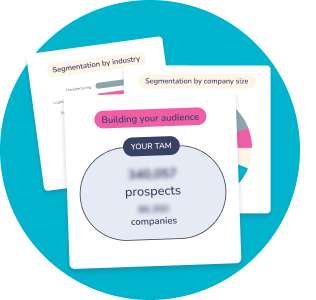
Our Market Navigator – built on Sopro’s B2B lead generation service expertise – generates a tailored report in seconds, including audience insights, segmentation, and projected campaign results.
Get clarity on who to target, where to focus, and what your pipeline could look like.Generate your TAM report now →




Share